More and more, special education leader transitions are happening mid-year or with little notice — a poor-fit hire that didn't work out, a senior leader resigning before a successor is named, a non-renewal that becomes public before the district is ready. For a superintendent, network leader, or principal, the call from HR may not be a complete surprise. But the question that follows almost always is: what happens to the special education work now?
The honest answer depends on what was built before the director left.
What actually survives a transition
In most districts, special education capacity lives in one or two people. The director knows where every compliance gap is. A trusted case manager remembers why a particular IEP was written the way it was. A principal has a working relationship with a specific family. When those people leave, the institutional knowledge leaves with them — compliance monitoring slips, service delivery becomes inconsistent, and the next director starts from something close to zero while students and staff muddle through.
Districts that have built systems weather these moments differently. What survives a transition isn't relationships or expertise — it's structure. Specifically:
- Roles and responsibilities frameworks that tell a new hire what's expected on day one
- Professional learning communities (PLCs) with clear purpose and standing agendas that meet whether or not central office shows up
- Compliance trackers that flag gaps before the state does
- Quality indicators for IEPs that mean the same thing in every building
- Distributed leadership — associate directors and lead teachers who can run the work without the director in the room
Districts with these structures absorb leadership changes. Districts without them restart every two or three years.
Burlington School District: three transitions, one through-line
ABC partnered with Burlington School District in Vermont as it went through three special education leadership transitions between 2021 and 2025. Over that period, Burlington integrated what was once a siloed department led by a single overstretched expert into a coherent approach across the district's ten schools.
Most districts would have lost ground. Burlington kept moving. ELA proficiency for students with disabilities rose from 2% to 18% over a few years. Relative IEP quality scores improved 67%. The department entered state-targeted monitoring with zeros across every indicator and resolved them all.
Like other districts experiencing a transition, Burlington hired and developed skilled leaders. But perhaps more importantly, they deliberately cascaded their development and processes across four stakeholder groups — executive director, associate directors, lead teacher mentors, and classroom teachers — with consistent messaging and clear roles at every level. They modeled the system transformation practices they wanted to see for students, and that's what made the improvements stick. When the next leader leaves, Burlington is confident students will continue to get what they need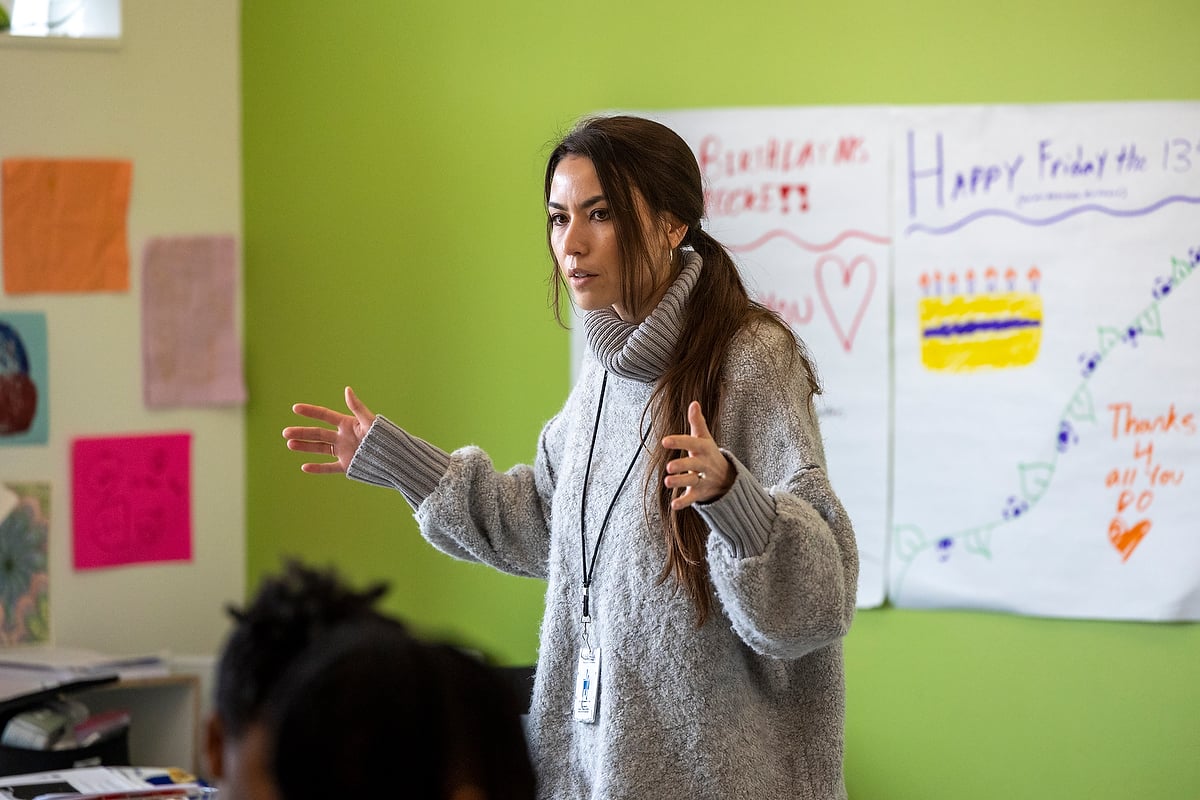
What to do in the next 90 days
If your director just left, three immediate moves matter as much as, if not more than, the search:
1. Audit what's actually documented. Walk into the special education office and ask: if every senior person left tomorrow, what could a new hire pick up and run with? Compliance calendar, IEP quality criteria, PLC agendas, roles documents, district-wide service expectations. The answer tells you how much your program depends on people versus structure.
2. Identify your second layer. Who else in the building or central office holds pieces of the work, and what can they lift if someone else leaves? Associate directors, lead teachers, and instructional coaches all play a role. Their authority needs to be made explicit, not assumed. A vacuum at the top fills fast — usually with whoever speaks loudest, not whoever should be leading.
3. Return to the vision and goals. And if you don't have them, start there. Now is not the time to launch a new initiative. Dig into what you want to accomplish before the transition occurs. The work after a transition is stabilization — protecting what's working, naming what's missing, making the gaps visible so the next director walks into clarity instead of chaos. To make that seamless, you have to know where you’re headed.
Building a program that outlasts its leaders
ABC works shoulder-to-shoulder with districts to deliberately construct systems — frameworks, routines, decision rules — because that's what makes a special education program healthy, durable, and able to last through staff transitions.
The measure of a strong special education program isn't who's running it today. It's whether the work continues when that person is gone. As Kellie Klasen, Burlington's Executive Director, put it: "One day, I'm not going to be me anymore. Somebody else needs to be ready. We don't want to be the keepers of all the information — we want to give as much opportunity and experience as possible, year to year."
If your district is in transition — or trying to prevent the next one from being a setback — we'd be glad to talk about what a more durable foundation could look like.
[Read the full Burlington case study →]