Our free Behavior Support Toolkit gives your team the observation forms, planning templates, and strategy guides to build a proactive, functions-based approach to student behavior, from defining a behavior to tracking what changes.
*****
Nora is a quick-witted and funny second grader, and she’s the first to volunteer when the class hamster needs feeding. Every morning, Nora follows along with the lesson until the writing folder comes out. Then Nora finds something else to do: a joke for the next table, a slow trip to the pencil sharpener, a question about lunch. The teacher redirects, Nora pushes back, and to keep the class moving, the teacher sends Nora to cool down in the office. Writing time ends. The pencil never moves. Tomorrow, it repeats.
Look at what just happened. Nora did not want to write, and by the end of the class period, she did not have to. The trip to the office was not a punishment to her; it was the exit she was looking for. The breakdown is not in Nora. It is in a system that reads her avoidance as defiance, then answers it with the one thing guaranteed to bring it back: a way out of writing.
That is the trap with a punishment-first response. Office referrals and lost privileges can pause a behavior, but when a behavior is about escaping a task, removing the student from the task gives them exactly what the behavior was for. Nora returns to the same writing she could not access in November, and the system misreads her again.
The useful question is not how to make Nora stop. It is what her behavior tells us and what the system around her needs to do differently. Meaningful support for behavior cannot rest on a single teacher's shoulders. It requires a collaborative effort where general and special educators, specialists, and leaders unite to share objective data, maintain intervention consistency, and rigorously monitor student progress.
 Behavior is Communication
A strengths-based approach to behavior rests on two beliefs:
- All behavior is communication, and it serves a purpose. A student is not acting out to ruin your lesson. The behavior is meeting a need.
- If students could meet behavioral expectations, they would. The behavior we want to change is usually a missing skill, not a refusal.
We already think this way about reading. A child who cannot yet decode is not lazy; she is still learning a skill we have not finished teaching. Nobody suspends a student for struggling with fractions. Yet when the missing skill is regulation or asking for help, we reach for consequences instead of instruction. Nora's avoidance is not a character flaw. It is a solution she found to a task that was out of reach, and no one had given her a workable way to say so.
While every student is unique, decades of behavioral research show that most challenging behaviors serve one of four primary functions.
The Four Functions Behind Almost Any Behavior
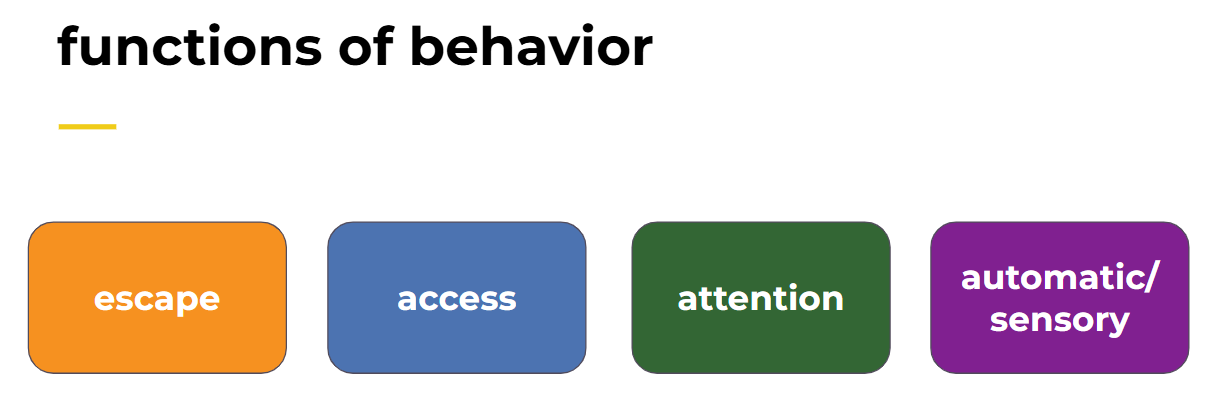
Once you ask what a behavior is for, the answers cluster into four functions:
- Escape or avoidance: getting out of a task that feels too hard. (Nora, every time the folder appears.)
- Access: gaining a desired item, activity, or outcome.
- Attention: getting a reaction from adults or peers.
- Sensory: meeting an internal need, like movement or quiet.
Name the function, and the system can teach a replacement behavior that meets the same need. For Nora, if the function is escape, that might mean writing built-in, smaller pieces and a quick, honored way to request a short break. The key is to get her back on task when she returns.
A Process Any Team Can Run
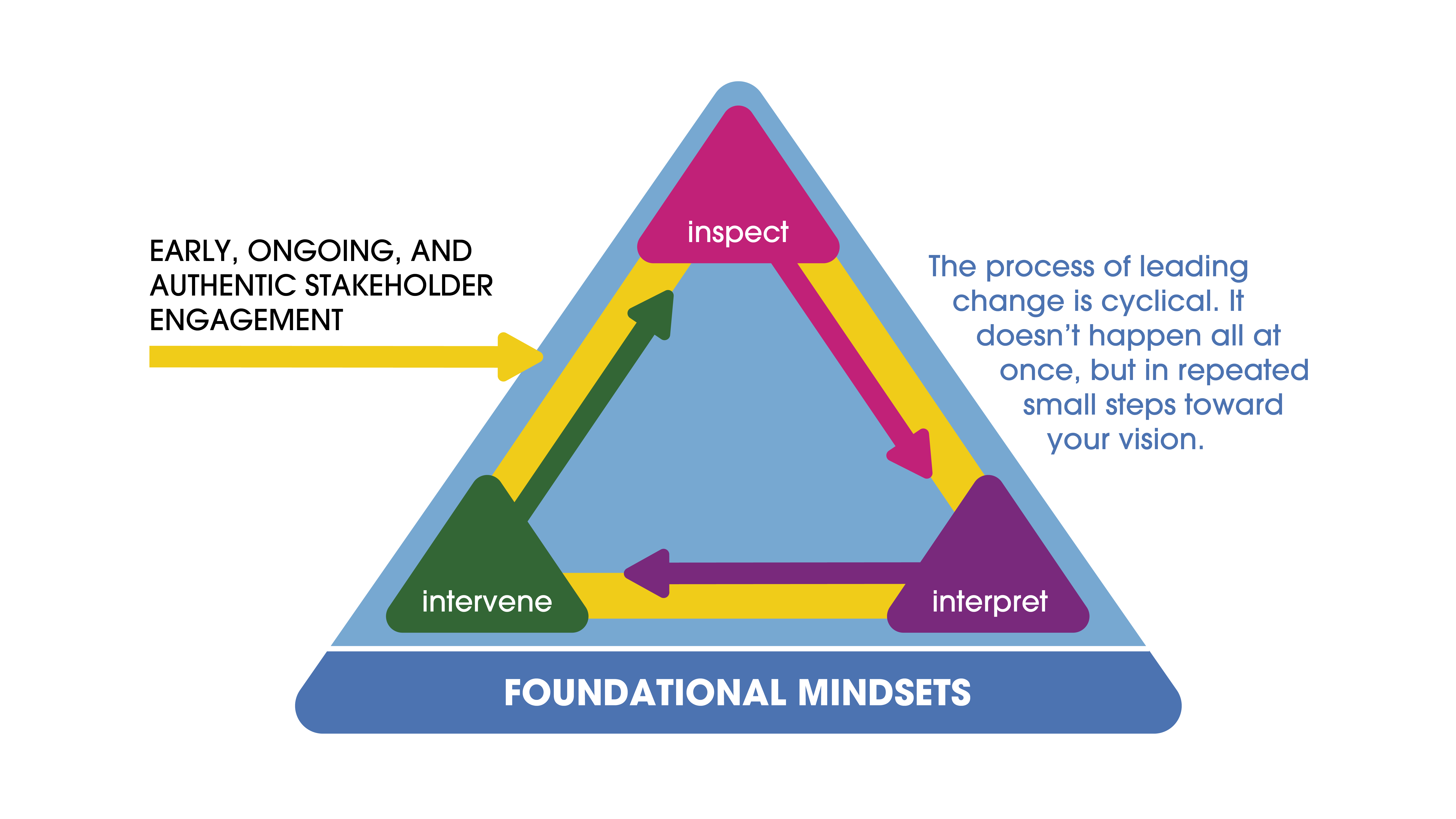
Good intentions are not a method. What makes a response approach effective is implementing a regular process that enables teams to work collaboratively, review objective data, and problem-solve until they get it right, with the same rigor they bring to academics:
- Identify the problem. Define the behavior in clear, observable terms.
- Analyze the problem. Collect antecedent-behavior-consequence data and use it to hypothesize the function.
- Develop a plan. Prevent the behavior, teach a replacement skill, and reinforce it.
- Implement and analyze. Track whether the plan is being used as designed and whether the student is changing.
Step four is where thoughtful plans break down. Teams often replace an intervention before they've confirmed it was ever implemented consistently enough to evaluate its effectiveness. A team designs something smart, then never checks whether the replacement skill was actually taught more than once. When it does not work, they blame the strategy, but usually, the strategy was never really implemented.
Why This Matters Now
Teacher turnover is at an all-time high, and many are naming behavior as a reason; students carry skill gaps after years of disruption; and mental health needs are higher than ever. Punishment also falls hardest on the students who can least afford it. Students with disabilities are suspended at more than twice the rate of their peers, and though they are 13% of enrollment, they receive 25% of out-of-school suspensions, according to the U.S. Department of Education's Civil Rights Data Collection.
Proof It Works
Meta-analyses of school-based research find that function-based interventions reduce challenging behavior and increase appropriate behavior across inclusive classrooms.
Our partner schools live it. At AppleTree Parklands, a public charter serving three- and four-year-olds in Southeast Washington, D.C., teachers faced a post-pandemic surge in classroom disruption. Working with our team, their educators studied behavioral data, designed targeted replacement strategies, and adjusted based on how students responded. Within the first year, the share of classroom moments where more than 90% of students were on task climbed by 25%. The systems held through staff changes, because the team owned them.
As one ABC partner school leader put it: "Identifying the functions of behavior and putting an intervention in place shows them that with time, they can see results. We can't just keep switching strategies. Overall, we're seeing that."
 Start with One Student
Nothing about Nora needs fixing. What needs to change is the system around her: a shared way to read her signals, a task she can access, and a reliable way to ask for what she needs. Put that in place, and the pattern breaks, because the conditions that produced it are gone.
When schools stop asking "How do we stop this behavior?" and start asking "What is this behavior telling us?", everything changes. Students receive the instruction they actually need—and educators gain a practical process for helping them succeed.
That's exactly why we created the Behavior Support Toolkit. Our free Behavior Support Toolkit gives your team the observation forms, planning templates, and strategy guides to run the full process, from defining a behavior to tracking what changes. Download the whole set, start with a single student, and build from there. The Ability Challenge is ready to work alongside you.
The Ability Challenge helps schools build the systems that let every learner thrive. World-Class Special Education Starts with ABC.
Sources: U.S. Department of Education, Civil Rights Data Collection (2017-18 and 2022); Learning Policy Institute, suspension report (2022); Gage et al., "Function-Based Intervention in Inclusive School Settings: A Meta-Analysis" (Psychology in the Schools); The Ability Challenge, "Building Schools Where All Students Thrive" (2025), and AppleTree Parklands @ THEARC partnership results.